Plant Genetic Resources Erosion due to Tobacco cultivation and potential for retrieval by food crops
 M.A. Sobhan || Saturday 27 June 2026 ||
1. Introduction
Agriculture plays an important role in Bangladesh's economy, despite rapid shifts toward industrial growth in the past few decades. Bangladesh belongs to the category of biogeographical regions of biodiversity origin. Rich, extensive, and diverse biological heritage is now at risk across all regions of the country due to environmental pollution, the introduction of exotic genotypes, monoculture, the aggressive introduction of hybrid species and varieties, and climate change. On top of that, the monoculture and extensive cultivation of tobacco are the latest emerging threats to Plant Genetic Resources (PGR) of Bangladesh.
Bangladesh is home to more than 5000 known higher plant species. They are the main source of food, fiber, timber, construction materials, medicine, fuel wood, and other necessities of rural livelihoods, but are experiencing major losses of their invaluable heritage of plant genetic resources.
The country’s commitments to international goals set out in agreements like the Convention on Biological Diversity (CBD), the International Treaty on Plant Genetic Resources for Food and Agriculture (ITPGRFA) call nations to put in place legal, institutional, and policy measures to ensure conservation and sustainable use of plant genetic resources. It is necessary to ensure that these resources remain available for posterity.
However, Bangladesh has hardly made any progress in these areas. We intend to highlight here the impacts of tobacco cultivation on plant genetic resources in agricultural systems in some areas of Bangladesh, with the aim of advancing our understanding of how a plant not indigenous to Bangladesh displaces biodiverse farming systems. Such understanding is necessary to assess the extent of PGR erosion caused by tobacco cultivation. To chart a path to sustainable growth, development and integration of environment with agro-biological diversity it is necessary to realize that tobacco must be withdrawn from the farming systems. It competes with a number of domesticated species and varieties in the farming systems of Bangladesh, primarily food crops, which are selected by farming communities to ensure food sovereignty. Cash crops and high value crops were grown for cash income and high market demand. Sometimes, market demand and external forces dictate farmers' decisions about crop production.
Tobacco is grown in the Rabi season (winter). In reality, tobacco occupies the land for about 7-8 months from mid-October to mid-April. Tobacco is grown as a monoculture, displacing a broad range of crops. This investigation aims to estimate the loss of Plant Genetic Resources (PGR) due to tobacco extension and to present examples of efforts to recover lost PGR in selected areas of the Kushtia, Bandarban, and Cox’s Bazar districts. The present paper is based on the field studies conducted in selected villages in Kushtia, Bandarban, and Cox’s Bazar districts, where tobacco is cultivated, on the availability of plant genetic resources. Through group exercises with the farmers, necessary information on the status of plant genetic resources in their farming community before and after the introduction of tobacco cultivation has been collected since March 2006.
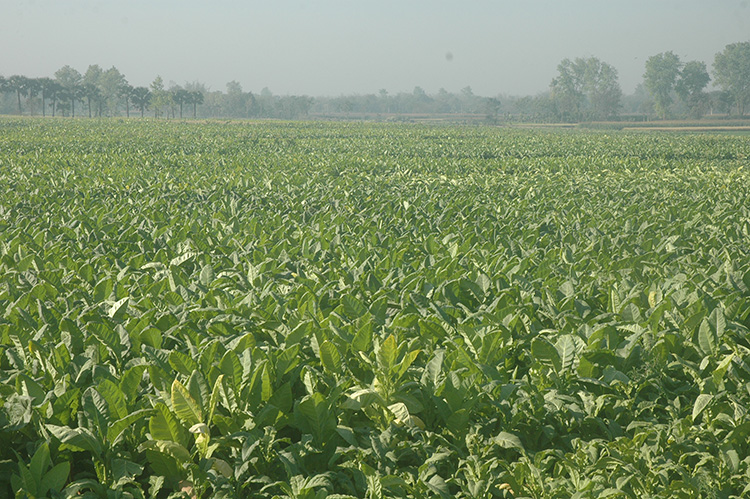
2. PGR before the introduction of tobacco:
Kushtia
Table 1: Crop Calendar for Kushtia
Legend: Sowing S Transplanting T, Harvest H
|
Crop |
Baishakh |
Jaishta |
Ashar |
Srabon |
Bhadra |
Ashwin |
Kartik |
Agrahayon |
Paush |
Magh |
Falgun |
Chaitra |
|||||||||||
|
Lentil |
|
|
|
|
|
|
S ............................ |
|
|||||||||||||||
|
Grass pea |
|
|
|
|
|
|
S............................................H |
|
|||||||||||||||
|
Field pea |
|
|
|
|
|
|
S ......................................................H |
||||||||||||||||
|
Chick pea |
|
|
|
|
|
|
S...............................................................H |
||||||||||||||||
|
Pigeon pea |
S ............................................................................................................................H |
|
|||||||||||||||||||||
|
Hogla |
|
|
|
|
|
|
|
S.........................H |
|
||||||||||||||
|
Kalikalai |
|
|
|
|
S.........................................H |
|
|
|
|
||||||||||||||
|
Black gram |
|
|
|
|
S..........................................H |
|
|
|
|
||||||||||||||
|
Mustard |
|
|
|
|
|
|
S..........................................H |
|
|
||||||||||||||
|
Rai |
|
|
|
|
|
|
S .....................................H |
|
|
||||||||||||||
|
Sesame |
|
|
|
|
|
|
|
|
S.........................H |
||||||||||||||
|
Linseed |
|
|
|
|
|
|
S...................................................H |
|
|||||||||||||||
|
Nut |
..........................H |
|
|
|
|
S............................................... |
|||||||||||||||||
|
Potato |
|
|
|
|
|
|
|
S........................H |
|
||||||||||||||
|
Brinjal |
|
|
|
S.....................................................................................................H |
|||||||||||||||||||
|
Sweet gourd |
|
|
|
|
|
|
|
|
S........................H |
||||||||||||||
|
Little cucumber |
|
|
|
|
|
|
|
|
S.........................H |
||||||||||||||
|
Radish |
|
|
|
|
|
|
S..............................H |
|
|
|
|||||||||||||
|
Okra |
..............H |
|
|
|
|
|
|
S.......................... |
|||||||||||||||
|
Arum |
......H |
|
|
|
S ............................................................................................... |
||||||||||||||||||
|
Leaf amaranth |
S..........H |
|
|
|
|
|
|
|
|
|
|
||||||||||||
|
Spinach |
|
|
|
|
|
S......................................H |
|
|
|
||||||||||||||
|
Stem amaranth |
|
|
|
|
|
|
S.................H |
|
|
|
|
||||||||||||
|
Cauliflower |
|
|
|
|
|
S............................H |
|
|
|
|
|||||||||||||
|
Cabbage |
|
|
|
|
|
S.......................................H |
|
|
|
||||||||||||||
|
Carrot |
|
|
|
|
|
S...................................................................H |
|
||||||||||||||||
|
Indian spinach |
S...................................................H |
|
|
|
|
|
|
|
|||||||||||||||
|
Bottlegourd |
|
|
S..............................................................................................H |
|
|
||||||||||||||||||
|
Ash gourd |
S..................................................................H |
|
|
|
|
|
|
||||||||||||||||
|
Yard long bean |
S...........................................H |
|
|
|
|
|
|
|
|
|
|||||||||||||
|
Cucumber |
S......................................H |
|
|
|
|
|
|
|
|
||||||||||||||
|
Elephant foot |
S............................................................................................H |
|
|
|
|
||||||||||||||||||
|
Onion |
|
|
|
|
S.............H |
S...............T....................................H |
|
||||||||||||||||
|
Garlic |
|
|
|
|
|
|
S......................................................H |
|
|||||||||||||||
|
Coriander |
|
|
|
|
|
|
S.....................................................H |
|
|||||||||||||||
|
Fenugreek |
|
|
|
|
|
|
S......................................................H |
|
|||||||||||||||
|
Black cumin |
|
|
|
|
|
|
S....................................................H |
|
|||||||||||||||
|
Annie |
|
|
|
|
|
|
S....................................................H |
|
|||||||||||||||
|
Chili |
S.........T.....................................................H S.........................................H |
|
|
|
|
||||||||||||||||||
|
Jayn |
|
|
|
|
S.........................................H |
|
|
|
|
||||||||||||||
|
Maize |
|
|
|
|
|
|
|
S............................................H |
|||||||||||||||
|
Wheat |
|
|
|
|
|
|
S...............................................H |
|
|||||||||||||||
|
Boro rice |
|
|
|
|
|
|
|
S...................T......................H |
|||||||||||||||
|
Sugarcane |
.......................................................H |
|
S....................................................................... |
||||||||||||||||||||
|
Jute |
S...............................................H |
|
|
|
|
|
|
|
|||||||||||||||
|
Tobacco |
|
|
|
|
S...........T............................................................................................................................H |
||||||||||||||||||
 ............... H
Bandarban and Cox's Bazar
Table 2: Crop Calendar for Cox’sbazar and Bandarban
Legend: Sowing S Transplanting T, Harvest H
|
Crop |
Baishakh |
Jaishta |
Ashar |
Srabon |
Bhadra |
Ashwin |
Kartik |
Agrahayon |
Paush |
Magh |
Falgun |
Chaitra |
|
|
Potato |
|
|
|
|
|
|
|
S.........................................H |
|
||||
|
Radish |
|
|
|
|
|
S..............................H |
|
|
|
|
|||
|
Tomato |
|
|
|
|
S..........T..................................H |
|
|
|
|||||
|
Okra |
|
|
|
|
|
|
S.........................................H |
|
|
||||
|
Brinjal |
|
|
|
S.............T..............................................................H |
|
|
|||||||
|
French bean |
|
|
|
|
|
|
S.......................................H |
|
|
||||
|
Bottle gourd |
|
S.............................H |
|
|
|
|
|
|
|
|
|||
|
Little cucumber |
|
|
|
S.....................................H |
|
|
|
|
|
||||
|
Sweet gourd |
|
|
|
|
|
S.............................................................................H |
|||||||
|
Yard long bean |
|
|
|
|
S...........................................H |
|
|
|
|||||
|
Cauliflower |
|
|
|
|
S............T......................................H |
|
|
|
|||||
|
Arum |
.........................................H |
|
|
|
|
|
S............................. |
||||||
|
Bitter gourd |
|
|
|
S......................................H |
|
|
|
|
|
||||
|
Papaya |
|
|
|
S.........................................................................................H |
|
||||||||
|
Cabbage |
|
|
|
|
S............T....................................................H |
|
|
||||||
|
Water gourd |
|
|
|
|
|
S.....................................................H |
|
|
|||||
|
Bean |
|
|
|
|
S...................................................................H |
|
|
||||||
|
Knolkhol |
|
|
|
|
|
|
|
S..............................H |
|
|
|||
|
Sweet potato |
|
|
|
|
|
|
|
S.....................................................H |
|||||
|
Snake gourd |
|
|
|
|
|
|
|
|
|
S........................H |
|||
|
Ribbed gourd |
|
|
|
|
|
|
|
|
S....................................H |
||||
|
Ash gourd |
S.........................................H |
|
|
|
|
|
|
|
|
||||
|
Leaf amaranth |
|
|
|
|
|
|
|
S..................H |
|
|
|
||
|
Stem amaranth |
S........................................H |
|
|
|
|
|
|
|
|
||||
|
Indian spinach |
S.....................................H |
|
|
|
|
|
|
|
|
||||
|
Jute leaf |
|
|
|
|
|
|
|
|
|
S..............H |
|
||
|
Felon |
|
|
|
|
|
S............................................................................H |
|||||||
|
Ginger |
S...........................................................................................H |
|
|
|
|
||||||||
|
Garlic |
|
|
|
|
|
|
|
S........................................H |
|
||||
|
Onion |
|
|
|
|
|
|
|
S..........................................H |
|
||||
|
Corriander |
|
|
|
|
|
|
S.....................................................H |
|
|||||
|
Chili |
|
|
|
|
S.............T............................................................H |
|
|||||||
|
Turmelic |
S...........................................................................................H |
|
|
|
|
||||||||
|
Rai |
|
|
|
|
|
|
|
S.........................................H |
|
||||
|
Mustard |
|
|
|
|
|
|
|
S..........................................H |
|
||||
|
Nut |
|
|
|
|
|
|
S.......................................................H |
|
|||||
|
Melon |
|
|
|
|
|
|
|
|
S..........................H |
|
|||
|
Water melon |
|
|
|
|
|
|
|
|
S.....................................H |
||||
|
Sugarcane |
........................................H |
|
S.................................................................................. |
||||||||||
|
Maize |
|
S..................................................................................H |
|
|
|
|
|||||||
|
Tobacco |
|
|
|
S.............................................................................................................................................................H |
|||||||||
Note: The Bangla months corroespond to : Baishak- Mid April to Mid May; Jaistha – Mid May to mid June, Ashar – Mid June to Mid July; Srabon: Mid July to Mid August; Bhadra – Mid August to Mid September; Ashwin- Mid September Mid October; Kartik- Mid October Mid November; Agrahayon- Mid November to Mid December; Paush Mid December to Mid January’ Magh – Mid January Mid February; Falgun- Mid February to Mid March’ Chaitra- Mid March to Mid April
Kharif-1:
The major Kharif – 1 crops were jute (Corchorus spp.), aus rice and summer vegetables including amaranth (Amaramthus spp.), Indian spinach (Basella alba), bitter gourd (Momordica charantea), okra (Abelmoschus esculentus), ash gourd (Benincasa hispida), pumpkin (Lagenaria siceraria),, cucumber (Cucumis sativus), ridged gourd (Luffa acutangula), string bean (Vigna sinensis), snake gourd (Trichosanthes anguina), brinjal (Solanum melongena), arum (Colocasia esculenta), plantain (Musa paradisica), papaya (Carica papaya) and sponge gourd (Xylocarpus granatum).
Kharif-II
The main crop of Kharif – II was aman paddy (Oryza sativa). The rabi crops included boro rice, pulses, and spices. The major pulses were grass pea (Lathyrus sativus), lentil (Lens esculenta), black gram (Vigna mungo), field pea (Pisum sativum), and gram (Cicer arietinum). Mustard (Brassica campestris) and Rape mustard (Brassica juncea) were grown as oil seeds. The winter vegetables were brinjal (Solanum melongena), beans (Vigna spp.), leaf amaranth (Amaranthus Tricolor), bitter gourd (Momosdica charantea), radish (Raphanus sativus), cauliflower (Brassica oleracea), cabbage (Brassica oleracea var. capitatta), watergourd (Lageneria siceraria), tomato(Lycopersicon lycopersicum), spinach (Spinacea oleracea), and turnip (Brassica oleracea).
Bandarban
Aus rice in Kharif 1 followed by amon rice in kharif 2 followed by rabi crops including boro rice (Oryza sativa), potato (Solanum tuberosum), chili pepper (Capsicum spp.), tomato (Lycopersicon Lycopersicum), brinjal (Solanum melongena), hyacinth been (Lablab purprens), string been (Vigna sinensis), okra (Abelmoschus esculentus), bitter gourd (Momordica charantia), snake gourd (Trichosanthes anguina), cow pea (Vigna spp.), radish (Raphanus sativus), groundnut (Arachis hypogea), cauliflower (Brassica oleracea), sweet gourd (Cucurbita maxima), water gourd (Lageneria vulgaris), vegetable jute (Corchosus spp.), pointed gourd (Trichosanthes dioica), mustard (Brassica campestris), wheat (Triticum aestivum), lentil (Lens esculenta), grass pea (Lathyrus sativus), black gram (Vigna mungo), garlic (Allium sativum), onion (Allium cepa), coriander (Coriandrum sativum), black cumin (Nigella sativa), sesame (Sesamum indicum), gram (Cicer arietinum), field pea (Vigna spp.), maize (Zea mays), water melon (Citrullus colocynthis), melon (Cucumis melo), cucumber (Cucurbita pepo), etc.
Previously before the introduction of tobacco there was a rich variability of plants including timber, fruits and medicinal herbs.
- Plants that are threatened because of the curing of tobacco leaf
- Threatened plants in Kushtia
Khoir (Acacia catechu), debdaru (Polyalthia longifolia), sheora (Strevlus asper), tetull (Tamarindus indica), jaggadumur (Ficus racemosa) , chatian,( (Alstonia scholaris) dewa (Artocarpus lacucha), ata (Annona muricata), hijol,(Barriangtonia acutangula), rida (Sapindus mukorossi) , khejur (Phoenix dactylifera) and pechigab (Diospiros peregrina)
Arjun (Terminalia arjinas), bel (Aegle marmelos), bot (Ficus benghalensis), pakur (Ficus religiosa), boroi (Zizyphus mauritiana), neem (Azadirachta indica), khudejam (Syzygium fruticosum), and shiml (Bombax ceiba).
Bathua (Chenopodium album), notey (Amaranthus viridis), katanotey (Amaranthus spinosus), kochusak (Colocasia spp.), shanti (Alternanthera sessilis), hagra (Xanthophyllum florescens)
b. Threatened Trees/ Plants in Bandarban
The major timber plants included gamari (Gmelina arborea), garjan (Dipterocarpus tumbinatus), telshur (Hopea odoratus), champa (Michelia champaca), gutgutia (Bersera serrata), dhakijam (Syzygium grande), batna (Castanopsis tribuloides), godagach (Fagara badrumga), shirish (Albizia lebbeck), jarul (Lagerstroemia speciosa), chakua koroi (Albizia chinensis), shil koroi (Albizia procera), and tetna koroi (Albezia odoratissimus).
Mango (Mangifera indiea), jack fruit (Artocarpus heterophyllus), litchi (Litichi chinensis), anona (Annona muricata), hogplum (Spondias pinnata), blackberry (Syzygium cummini), date palem (Phoenix dactylifera), tamarind (Tamarindus indicus), belembu (Averrhoa bilimbi), batna (Quercus spicata), pania gola, plum (Zyzyphus oenoplea), palmyra palm (Borassus flabellifer) and citrus (Citrus spp.).
Modongosta (Dehasia kurzi), kerum (Deris indica), amloki (Phyllanthus embelica), kodom (Anthocephals chinensis), jhau (Casuarina littorea) and achargola (phyllanthus acidus)
c. Threatened Plants in Cox’s Bazar
The major timber plants included garjan (Dipterocarpus turbinatus), gamari (Gmelina arborea), shilbatna (Quercus velutina), badsha batna (Quercus spicata), barojam (Syzygium cumini), putijam (Syzygium cerasoideum), shilkoroi (Albizia procera), rajkoroi (Albizia richardiana), bokkoroi (Albizia lucida), gutguitta (Bursera serrata), goda, (Vitis glabrata) sonalu (Cassia fistula), telsur (Hopea odorata), and ashshul (Vitis peduncularis).
Mango (Mangifera indica), jack fruit (Artocarpus heterophyllus), litchi (Litchi chinensis), amloki (Phyllanthus embetica), jam (Syzygium cumini, hogs plum (Spondias pinnata), tamarind (Tamarindus indica), guava (Psidium guajava), pomegranate (Punica granatum), anona (Annona muricata), date-palm (Phoenix dactylifera), Indian olive (Elaeocarpus robustus), belembu (Averrhoa bilimbi), painagola (Calophyllum inophyllum), lemon (Citrus spp.) and Palmyra palm (Borassus flabellifer)
Arjun (Terminalia arjuna), harkata (Acanthus illicifolius), amloki (Phyllanthus embelica), haritaki (Terminalia chebula) and kerum (Deris indica).
3. Factors for erosion of genetic resources in the tobacco growing areas:
Chemical fertilizers are applied in the tobacco field from land preparation to different stages of growth and development of plants. The major fertilizers include urea, phosphate, boron, zinc, MOP, manganese, potassium, DAP, sulphate, and TSP. The chemical fertilizers in high concentrations become toxic for the bottom line of food chain of the biological diversity including algae, fungi, bacteria, phyto-plankton and zoo-plank-ton.
Farmers apply pesticides in tobacco field starting from land preparation before sowing seeds in the seed bed and transplanting seedlings in the field, after transplanting of seedlings in the field, at growing stage of plants and de-heading after flowering.
The farmers use five types of pesticides before sowing in the seed bed, 22 types after transplanting and 27 types during growing stage and one type after de-heading. These include destructive pesticides such as Ripcord, Furadon, Sumithion, and Thiovit. The pesticides have killing impacts on biological diversity.
One kilogram of tobacco production requires 12 kg of fire wood from different sources irrespective of species for curing of tobacco. Monoculture plantation of fast growing plants for production of fire wood like akashmoni (Acacia moniliformis), eucalyptus (Eucalyptus spp.) mangium (Acacia mangium), rain tree (Albezia lucida), mahagoni (Swietenia mahagoni), debdaru (Polyalthia longifolia) leads to loss of PGR for competation of space.
Tobacco has been extended at the cost of many crops including food crops. Tobacco is not food of any animal including cow, buffalo, goat, other animals and birds.
All forms of plants including small and big trees have been logged for curing of tobacco, consequently food and shelter of many birds and animals have been reduced.
Indiscriminate use of pesticides for crop production has been poisoning environment including soil, water and air. Fish diversity has declined in open water bodies. Consequently, the bird population and variability have also been declining.
There were variable aquatic diversity including rivers, canals, beels and baors. These aquatic habitats were full of varieties of fish and other life forms. Migratory birds from for away destinations would visit these spots.
4. Retrieval of PGR by extension of Food crops:
a) Manikpur, Cox’s Bazar
Manikpur village stands on the bank of the Matamohuri river in the hilly area of Chokoria upazila in Cox’s Bazar district. For sometimes in the recent past, the main crop of Manikpur was tobacco. Nayakrishi Andolon of UBINIG introduced diversified crops in this village. This was initiated through the program of, “Production of food crop as a way of shifting out of tobacco.” A total of 75 farmers have joined the program for growing food crops since 2007. They started food crops production by abandoning tobacco. Encouraged by the examples of the Nayakrishi farmers, other farmers of the locality have been growing food crops. Consequently, diverse types of vegetables have been available for use by the community. These included potato (Solanum tuberosum), felon (Vigna spp.), sweet gourd (Cucurbita maxima), sweet potato (Ipomoea batata), okra (Abelmosehus esculentus), tomato (Lycopersicon Lycopersicum), aroatic rice (Oreyza sativa), chili pepper (Capsicum frutescens), cabbage (Brassica oleracea var. capittata), cauliflower (Brassica oleracea var botrytis), brinjal (Solanum melongena), yard long bean (Vigna sinensis), etc. In addition many uncultivated vegetables including bathua (Chenopodium album) , katamarish (Amaranthus spinosus), thankuni (Centrella asiatica), kolmi (Ipomoea aquatica), helenccha (Enhydra flactuana), kochu (Colocasia spp.), Amrul (Oxalis corniculata), and gima (Glinus oppositifolius) have been coming up due to change of cropping pattern.
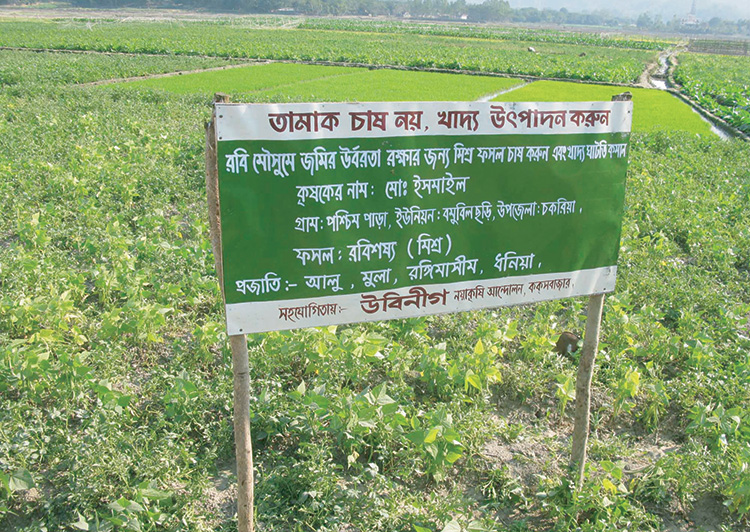
b) Rupashipara, Lama, Bandarban
This region is served by the Lama canal and popa canal. Tobacco production was introduced about 25 years ago. Production of vegetables and cereals was reduced due to the extension of tobacco. UBINIG effort for production of food crops in place of tobacco was carried out since 2006.
The farmers followed Nayakrishi principles for production of crops. The priority crops included potato, French bean, felon, okra, bean, sweet gourd, chili pepper, tomato, brinjial, etc.
c) Mirpur and Daulatpur, Kushtia:
Sufficient quantities of cereals, pulses, vegetables and spices used to be grown in the villages of Mirpur and Daulatpur upazilas of Kushtia district. The production of these items was so sufficient as to meet local demand and supply the surplus quantities outside the region as well. But there was a sharp decline of agricultural production followed after the introduction of tobacco as a crop. However, the production of these items has improved since the inception of the project, “transition from tobacco to food crops production” since 2006. The increased availability of the plant genetic resources included:
Cereals-rice (Oryza sativa), wheat (Triticum aestivum), maize (Zea mays)
Pulses – grass pea (Lathyrus sativus), lentil (Lens esculenta), sweet pea (Pisum sativum), gram (Cicer arietinum)
Spices – chili (Capsicum annum), onion (Allium cepa), garlic (Allium sativum), coriander (Coriandrum sativum), black cumin (Nigella sativa), ginger (Zingiber officinale), turmeric (Curcuma longa).
Vegetables – Potato (Solamnum tuberosum), cucumber (Cucumis sativus), pointed gourd (Trichosanthes dioica), sweet gourd (Curcuma longa), brinjal (Solanum melongena), yard long bean (Vigna sinensis), ridged gourd (Trichosanthes anguina), okra (Abelmojchus esculentus), cabbage (Brassica oleracea), cauliflower (Brassica oleracea), leaf amaranth (Amaranthus spp.), spinach (Spinoccea oleracea), Indian spinach (Basella alba).
5. Role of Seed Wealth centers and Seed Huts in supporting transition from tobacco to food crops:
Nayakrishi Seed Network (NSN) supported transition in relation to providing seeds for transition and substitute crops, and establishing Seed Huts in the research villages. This was primarily a demand from women, as they felt the need to have their own reserve of seeds for shifting to food and other agricultural crops. Nayakrishi farming emphasizes local seed maintenance and has successfully developed a network of community Seed Wealth Center, Seed Hut, and farmers' houses for seed saving. The interactions with the farmers willing to shift from tobacco indicated very strongly that the availability of seeds of vegetables, rice, pulses, and other crops is an essential condition for the sustainability of their efforts to shift. Tobacco is grown in the winter season. Tobacco companies provide seeds to the farmers in time. Therefore, the institutional responsibility of Nayakrishi is to ensure necessary and timely supply of seeds of the substitute crops.
The farmers also demanded that the establishment of Seed Huts is very helpful and it gives confidence to the farmers about the availability of seeds. Through the Seed Huts, a new dynamic of self-reliance on seeds needed for the transition to food crops is created. Accordingly Seed Huts were established in the main tobacco growing areas of Kushtia, Bandarban and Cox’s Bazar districts.
6. PGR regeneration:
a) Seed Distribution for Substitute Crops:
Seed distribution was an essential form of institutional support during the cultivation of substitute crops during the tobacco-growing season. The farmers had lost their seeds due to tobacco cultivation, so when they selected substitute crops in different combinations, the main challenge was obtaining seeds. NSN could provide institutional support by supplying the seeds. The crop seeds included cereals, pulses, oil seeds, vegetables, spices, etc:
Cereals – Rice (Oryza sativa), wheat (Triticum estivum) and maize (Zea mays)
Pulses – Black gram (Vigna mungo), field pea (Pisum sativum), grass pea, lentil (Lens esculenta), felon (Vigna spp.) (cowpea), groundnut (Arachis hypogea)
Oil seeds – Sesame (Sesamum indicum), linseed (Linum usitatissimum), mustard (Brassca campestris)
Vegetables – Potato (Solanum tuberosum), amaranth (Amaranthus spp.), sweet gourd (Cucurbita maxima), cucumber (Cucumis sativus), little cucumber (Cucumis sativus) tomato, (Lycopersicon lycopersicum), cauliflower (Brassica oleracea), spinach (Spinaceae oleracea), French bean, string bean (Vigna sinensis), radish (Raphanus sativus), bitter gourd (Momordica charantia) and bringal (Solannm melongena)
Spices – Garlic (Allium sativum), coriander (Coriandrum sativum), fenugreek (Trigonella foenum-granatum), black cumin (Nigella sativa), chili pepper (Capsicum annum)
b) Tree plantation:
Saplings of korio (Albizia procera), jam (Syzygium cumini), litchi (Litchi chinensis), haritaki (Terminalia chebula), bahera (Terminalia belerica), Indian olive (Elacocarpus robustus), amloki (Phyllanthus embelica), etc were distributed among the farmers for plantation.
7. Conclusion
With a view to addressing the challenging task of enriching PGR through crop diversification, UBINIG researchers had discussion with the farmers. They discussed about the improvement of crop diversity against the impending danger of monoculture of tobacco. The farmers in Bandarban and Cox’s Bazar districts listed 26 crops including potato, brinjal, groundnut, French bean, cowpea, chili pepper, tomato, mustard, water melon, little cucumber, sweet gourd, garlic, yard long bean, cauliflower, cabbage, okra, onion, bitter gourd, yam, taro, boro rice, mungbean, black gram, sweet potato, maize, etc. as substitutes for tobacco. These crops are suitable for cultivations during October – April when tobacco is grown at present. The farmers in Kushtia district also mentioned the names of potato, boro rice, wheat, mustard, lentil, garlic and maize for the same period. The incorporation of diverse crops against the present monoculture of tobacco will not only ensure food sovereignty and port folio options of the farming community but also encourage the natural growth and development of biological diversity.
8. Recommendations
There is an urgent need to document and regenerate the plants to re-establish the species in their original habitats. The farmers in Kushtia, Cox’s Bazar, and Bandarban have lost the seeds of the local varieties of crops that used to be grown before the introduction of tobacco cultivation. It was further observed that the availability of uncultivated vegetables, medicinal herbs, and cattle feed was severely affected by tobacco cultivation.
In order to prevent the present process of Plant Genetic Resources (PGR) destruction by tobacco cultivation, with the need to reverse the trend of tobacco aggression, restoration of soil quality, biodiversity and enhancement of the environment, immediate actions must be taken by the Ministry of Environment and Forest, and particularly the Department of Forest, the Ministry of Agriculture and other relevant organizations.