Nayakrishi Biodiversity and Disaster Resilience
 Farida Akhter || Friday 23 October 2026 ||
Policy paper
Farmer-led biodiverse agroecology and the implementation of Global Biodiversity Framework Target 10 in Bangladesh
A disaster does not end for a farming family when floodwater recedes, or a cyclone passes. The loss due to disaster is not only damage of the dwelling, loss of the household belongings, trees, etc. Its effects are much severe when standing crops are damaged, seed is lost, the planting season shortens, fodder disappears, the cows and goats starve and die. Recovery depends on whether people can resume producing food under conditions that may differ sharply from those before the disaster. Bangladesh therefore needs an agricultural policy that protects the continuing capacity to cultivate, nourish communities and regenerate the ecological foundations of rural life.
Nayakrishi Andolon, a biodiversity-based farming practice, provides an important foundation for such a policy. Its experience brings together diverse crops and varieties, living soil, livestock, fish & aquatic life, community seed institutions and farmers’ knowledge. These relationships matter because agricultural resilience depends on having different responses when a familiar crop, planting date, or supply source becomes unreliable. The movement contributes both ecologically and institutionally: it conserves biological possibilities while organizing people’s capacity to use them (Mazhar, 2019; Mazhar & Akhter, 2023).
This makes Nayakrishi directly relevant to Target 10's agricultural objectives under the Kunming–Montreal Global Biodiversity Framework. Target 10 calls for sustainable management across agriculture, aquaculture, fisheries and forestry, explicitly including agroecological approaches that sustain biodiversity, productive capacity, resilience and food security. Nayakrishi can provide a core pathway for Bangladesh’s agricultural contribution to this target. Achieving the whole target also requires appropriate action in its other sectors (Convention on Biological Diversity [CBD], 2022).
Disaster resilience through the continuity of cultivation and regeneration
Bangladesh’s exposure to floods, cyclones, coastal salinity, waterlogging, drought and heat makes the relationship between biodiversity and agricultural recovery particularly consequential. Its National Adaptation Plan identifies the sensitivity of agriculture and rural livelihoods to changing climatic conditions. However, exposure is only part of the problem. Land access, debt, drainage, seed availability, transport and the distribution of public support influence whether a weather event becomes a prolonged livelihood crisis (Ministry of Environment, Forest and Climate Change [MoEFCC], 2022).
Resilience must therefore include the capacity to withstand damage, reorganize cultivation and sustain adequate diets without exhausting future productive resources. A household that obtains a harvest only by selling breeding animals, consuming its remaining seed or taking unmanageable debt may have survived the immediate emergency while becoming more vulnerable to the next one. Recovery programmes should assess these consequences alongside hectares replanted and tonnes harvested.
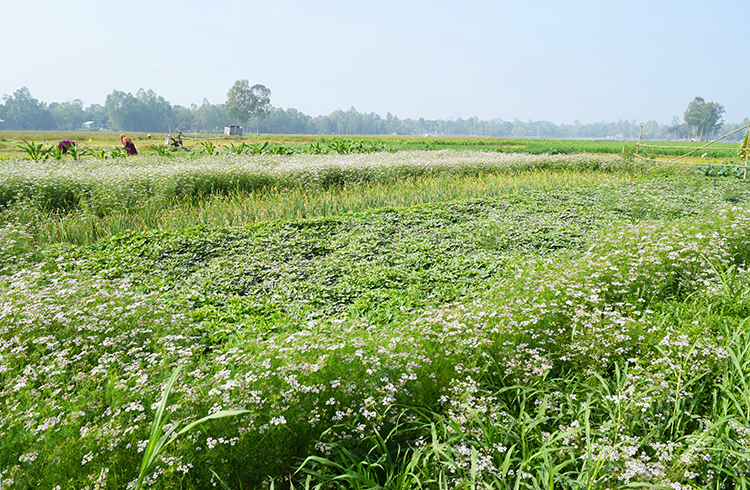
Biological diversity provides options for responding to these disruptions. Its value depends on differences in crop function, maturity, water requirements, and suitability to land types, as well as farmers’ access to the relevant planting material. Diversity can reduce shared exposure when crops respond differently to the same stress. It cannot guarantee protection against every event, and a severe flood or storm can overwhelm several components simultaneously. Ecological farming must work alongside early warning, safe shelter, drainage, water governance and social protection. The IPCC recognises the adaptation potential of agroecological practices while stressing that benefits and trade-offs depend on context (Intergovernmental Panel on Climate Change [IPCC], 2022).
Biodiversity and ecological regeneration in Nayakrishi
Nayakrishi understands agriculture through the continuing regeneration of life and the relationships that sustain lives and livelihoods. Its field of concern includes cultivated land, homesteads, ponds, uncultivated vegetation, animals and shared resources. These interconnected spaces sustain food, fodder, fuel, seed and medicinal resources while maintaining the soil, water and biological relationships through which life continues. Biodiversity conservation therefore occurs through the everyday activities by which farming communities sustain themselves and renew their shared ecological world (Mazhar, 2019).
Nayakrishi’s ten principles give practical direction to this understanding. They call for ending pesticide and chemical fertiliser use, keeping seeds in farmers’ hands and fields, protecting groundwater, maintaining cultivated and uncultivated food and fodder sources, practicing mixed cropping and rotation, assessing the whole farming system, caring for livestock and poultry, conserving aquatic life, and strengthening livelihoods. These principles work through their relationships with one another. Seed conservation depends on continued cultivation; cultivation draws upon soil fertility and water; livestock connect fodder with manure; and the continuity of these activities depends on knowledge, labour, access to resources and community cooperation. Their combined significance lies in maintaining the capacity of the agroecological system to regenerate and sustain its inhabitants (Mazhar & Akhter, 2023).
Composting, crop residues, green biomass and manure participate in the circulation of organic matter through which soil and its living communities renew themselves. Crop–livestock relationships connect vegetation, fodder, animal life and manure, while mixed cropping and rotation support different habitats and biological interactions. Field boundaries, ponds and uncultivated spaces contribute to these processes by providing food, shelter and conditions for diverse organisms to continue their lives. Farmers participate through observation, experimentation, labour and collective care. Their activities help sustain and enrich relationships that no isolated agricultural input can reproduce.
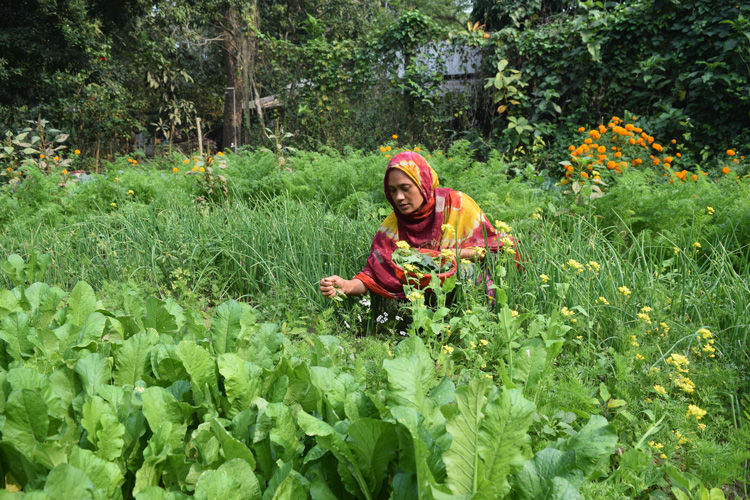
Compost must therefore be understood within this wider process of regeneration. Treating it simply as a manufactured substitute for chemical fertiliser, with a separately calculated “production cost,” obscures the relationships through which biomass circulates, soil fertility develops and farming communities sustain themselves.
This changes what it means to assess the whole farm. Grain yield remains important for household and national food requirements, but it must be understood alongside the continuing availability of vegetables, pulses, fodder, livestock products, aquatic foods and uncultivated resources. The central question is whether cultivation renews the capacities that make these different forms of nourishment possible.
This understanding also places farming within the pursuit of a dignified and joyful life – a Shahaj way to Anando grounded in Bengal’s traditions of thought and practice. Farming becomes a way of cultivating relationships through which humans participate in the continuing regeneration of their shared world. Its policy significance concerns whether people can sustain meaningful relationships with land, water, seed, food and one another while enabling other living beings to flourish. Ecological regeneration and the regeneration of livelihoods belong within this common horizon (Mazhar, 2019).
Independent research and the assessment of regeneration
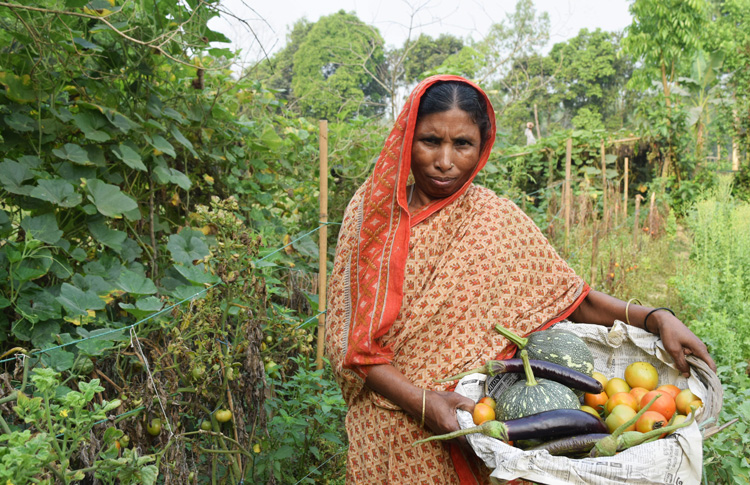
Independent research provides evidence for several ecological relationships central to this approach. Tamburini et al. (2020) reviewed 98 meta-analyses and conducted a second-order synthesis drawing on 5,160 original studies. Agricultural diversification generally strengthened biodiversity, pollination, pest regulation, nutrient cycling, soil fertility and water regulation without an overall reduction in crop yield. Outcomes varied across practices and circumstances, demonstrating the importance of locally grounded assessment.
These findings matter because they show that cultivation can sustain food harvests while strengthening biological relationships. What the research describes as improvements in “ecosystem services” includes processes through which agroecological systems maintain their living capacities. The findings should therefore inform an enquiry into regeneration, without assuming that the language of services and yields captures its full ecological and social meaning.
Rasmussen et al. (2024), drawing on 24 studies covering 2,655 farms in 11 countries, examined diversification involving crops, livestock, soils, noncrop vegetation and water conservation. Combining diversification strategies generally produced stronger joint social and environmental outcomes than applying individual strategies alone. This supports examining how practices interact within an agroecological system. It also provides grounds for investigating whether those interactions strengthen the capacity to sustain diverse life and livelihoods over time.
Seed sovereignty and disaster resilience
Farming households as living institutions of research and conservation
Seed has strategic significance in Nayakrishi because it connects the continuity of life with people’s capacity to sustain their livelihoods. A harvest can meet immediate food needs, but the possibility of another harvest depends on access to viable seed, suitable conditions for cultivation and the knowledge needed to bring them together. Seed conservation therefore concerns the continuing capacity of communities to cultivate, nourish themselves and regenerate their agroecological surroundings. Its significance extends through the relationships among seed, soil, water, plants, animals and human care (Mazhar, 2019; Mazhar & Akhter, 2023).
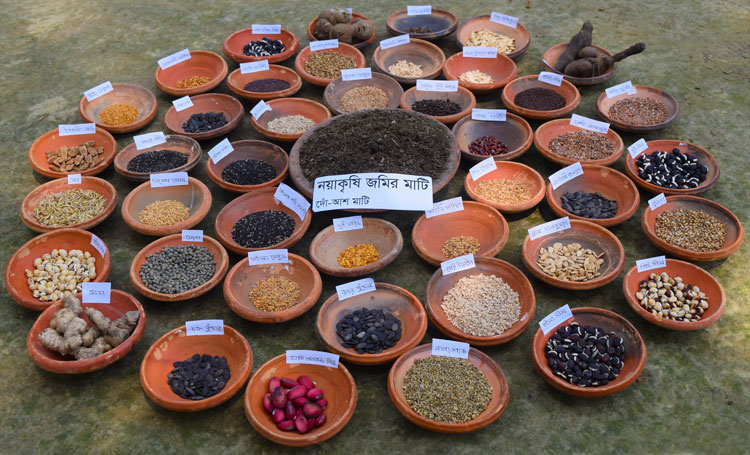
This understanding places farming households at the centre of agricultural biodiversity conservation. In Nayakrishi, households cultivate and select seed, observe changing conditions, maintain reserves and exchange planting material and knowledge. They are institutions through which conservation, research and everyday life remain connected. Recognising this institutional capacity changes the national policy question. Bangladesh needs to support the people and ecological relationships through which seed remains available, meaningful and capable of renewing life, alongside the facilities that protect stored collections.
Seed, food and nutritional sovereignty
Seed sovereignty concerns farmers’ effective authority and capacity to conserve, cultivate, select, regenerate and exchange seed, and to influence the rules governing these activities. Sovereignty depends on material access, knowledge and collective institutions, together with access to land, water and the conditions required for cultivation.
Food sovereignty extends this capacity into decisions about what is grown, how food circulates and whose needs guide agricultural policy. Nutritional sovereignty, concerns people’s capacity to sustain diverse, culturally meaningful and nutritionally adequate diets through authority over the conditions of their provision. Seeds of pulses, vegetables, oilseeds, spices and fruits help sustain different dimensions of nourishment.
Seed diversity is connected to the continuity of different food relationships. It supports crops that mature at different times, grow in different places and meet different household requirements. Its strategic value emerges through farmers’ ability to choose combinations appropriate to their ecological circumstances. This capacity must also be connected with livestock, fish & aquatic resources and uncultivated foods, since neither food nor nutritional sovereignty can be reduced to cultivated seed alone (Mazhar, 2019).
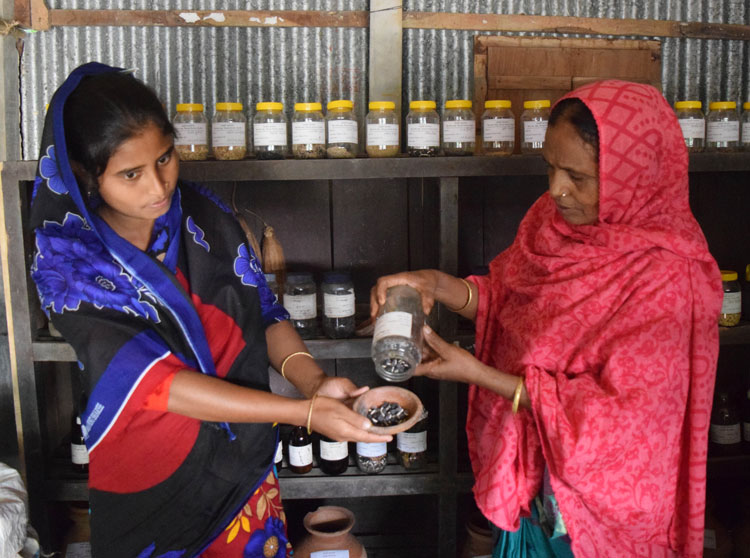
The UN Declaration on the Rights of Peasants (UNDROP) provides a normative foundation for this approach. Article 19 recognizes rights relating to seed and calls for support to peasant seed systems and agrobiodiversity. Giving practical effect to these principles requires appropriate national measures and institutions through which farmers can exercise their rights (United Nations General Assembly, 2018).
The farming household as a research institution
The Nayakrishi farming household is a critical site of empirical observation. Farmers encounter seed through the entire course of its life: selection, storage, germination, growth, flowering, harvest and renewed selection. They observe how a variety behaves under particular water levels, soils, planting dates and weather conditions. They also assess straw, fodder, cooking qualities, storage behaviour and suitability for household use. These observations connect characteristics that a narrowly defined yield trial may examine separately or leave outside its scope.
Such knowledge develops through repeated engagement. Farmers compare seasons, remember unusual conditions, retain material that may become useful again and discuss results with neighbours. Experimentation can involve a different sowing date, a crop combination, another position within the landscape or a change in seed storage. The household brings observation and practical consequences into the same field of enquiry: an unsuitable decision affects food, seed reserves, labour and livelihood. Research here concerns the continuing capacity to live through changing conditions (Mazhar & Akhter, 2023).
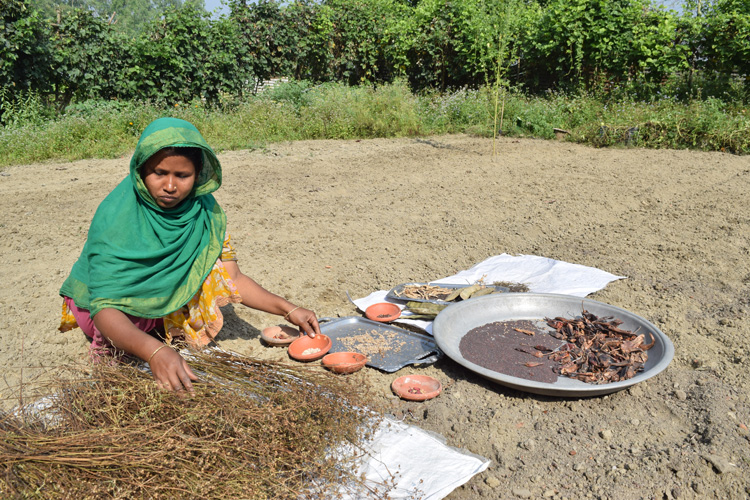
Women’s specialized work is central. Decisions about seed selection, drying, storage and household food frequently depend on women’s accumulated experience. Recognizing the household as research infrastructure must therefore include recognizing authority within it. Public programmes should remunerate custodians, support women’s control over resources and prevent new conservation duties from becoming an additional unpaid burden (UBINIG, 2022).
Connecting in situ and ex situ conservation
Nayakrishi households connect conservation through cultivation with conservation through storage. In the terminology of the Convention on Biological Diversity, in situ conservation includes maintaining cultivated species in the surroundings where their distinctive properties developed. On-farm conservation is therefore a relevant form of in situ conservation. Ex situ conservation maintains biological resources outside those surroundings. Household and community seed collections can provide local ex situ functions when managed for conservation outside cultivation, alongside the seasonal storage that enables on-farm continuity (Convention on Biological Diversity [CBD], 1992).
The household institution links these functions across space and time. Its fields and associated cultivation areas maintain plants within agroecological relationships. Its seed stores protect planting material between seasons and retain options that may be needed later. Seed moves from cultivation into storage and back into cultivation, accompanied by knowledge about its identity, behaviour and uses. The research and decisions connecting these activities give the collection its practical significance.
Conservation through cultivation also allows crops to encounter changing conditions and farmers’ continuing selection. Conserving genetic material in storage and maintaining the capacity for local adaptation are related but distinct tasks. Neither can automatically substitute for the other.
Ecological regeneration extends beyond the multiplication of seed. Seeds germinate within relationships involving soil organisms, water, vegetation, animals and human activity. Renewing seed stocks matters because it helps sustain those relationships and the livelihoods they support.
The limits of conservation separated from farmers
Conventional genebanks organise conservation through accession collections, controlled storage, viability monitoring, documentation and periodic regeneration. These functions provide important protection against the loss of genetic resources. FAO standards explicitly recognise regeneration as a central responsibility of genebanks and seek to maintain the genetic integrity of accessions during that process (Food and Agriculture Organization of the United Nations [FAO], 2014).
Public science can make an essential contribution through seed health assessment, germination testing, duplicate conservation and collaborative research. Its role becomes more effective when these capabilities support households and communities as continuing custodians and investigators. Article 9 of the Convention on Biological Diversity explicitly frames ex situ measures predominantly as a complement to in situ conservation, providing a foundation for this relationship (CBD, 1992).
A national strategy should therefore establish reciprocal obligations between genebanks and farmer institutions. Agreements should address access to deposited material, return of useful information, appropriate consent for research and safeguards for community knowledge. Public collections need pathways through which farmers can recover varieties and participate in decisions about their conservation and use. Scientific and household institutions can then perform different functions within a shared conservation system.
Nayakrishi’s distributed seed institutions
There are nearly 2,800 rice varieties and 538 varieties of vegetables, oilseeds, pulses and spices within a network of two Community Seed Wealth Centres, in Tangail and Pabna, and nine Seed Huts. These rice seed collection are regenerated annually (UBINIG, n.d.). Their significance lies in the continuing work through which collections remain viable and connected to cultivation.
Farming Households keep seed close to where it can be used. Seed Huts connect local custodians and neighbouring farmers in 4-5 adjacent villages. The specialised women’s seed network retains knowledge of particular crops and varieties, while Community Seed Wealth Centres support wider conservation, documentation and exchange. Taken together, these institutions distribute responsibility and connect local observation with resources beyond one household (Mazhar, 2019).
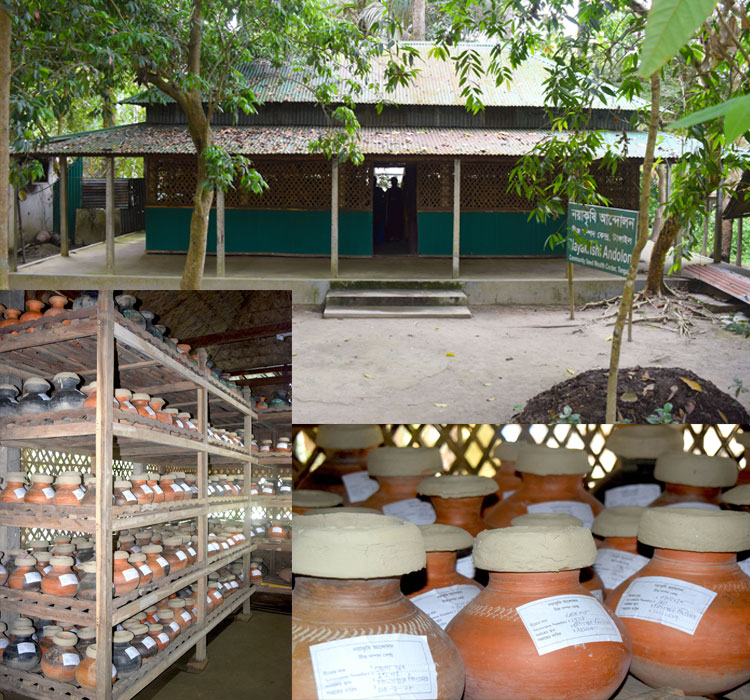
The wider centres should strengthen the household foundation of the system. Their value includes helping replenish stocks, locate suitable planting material, conserve varieties that need additional support and connect farmer enquiries with public research. A policy that supports centres while neglecting household cultivation, seed work and access to land would weaken the relationships on which the centres depend.
Seed as the strategic foundation of disaster resilience
Seed is especially consequential after a disaster because the opportunity to cultivate is time-sensitive. A household may have money but lack access to a viable variety suited to the remaining season. Roads may be damaged, commercial supplies may arrive late, or available seed may require conditions that no longer exist. Recovery depends on bringing together suitable seed, ecological knowledge and timely access to the conditions for cultivation.
Apadkalin Beez, or seed for times of emergency, organises this capacity in advance. In Bangla, farmers use the word “apad” to describe a calamity, danger, or unforeseen condition that interrupts ordinary life. A sudden flood, untimely rain, drought, crop disease, or loss of seed may all become an apad. Apadkalin Beez can therefore be translated as “seeds for times of crisis” or “emergency seeds.” However, Apadkalin Beez means much more than storing extra seed for use after a disaster. It describes a farmer-led method of anticipating uncertainty, preserving alternative courses of action, and restoring cultivation without waiting for seed markets, private companies, relief agencies, or government distribution programs [Akhter & Mazhar, 2026].
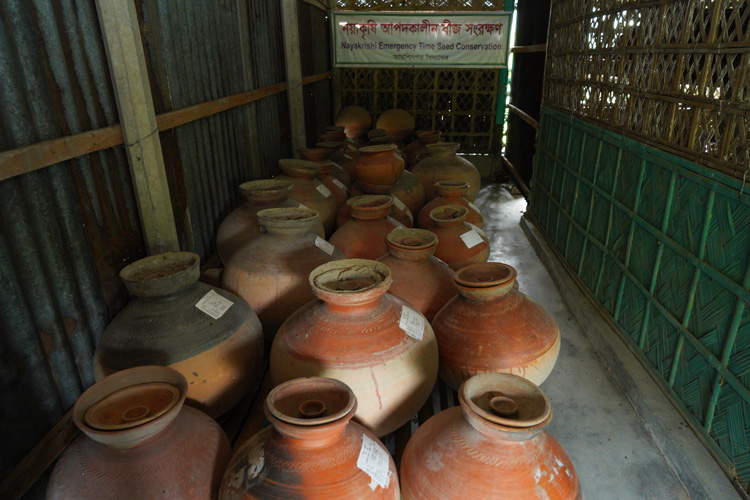
A reserve may support re-sowing of the original crop, provide a shorter-duration variety or enable a different crop to occupy the remaining land. The appropriate choice depends on water, soil, weather, labour and household food requirements. Emergency seed is consequently part of a continuing cultivation and regeneration strategy, rather than an isolated relief commodity.
During the 2024 the excessive rainfall destroyed Aman seedbeds prepared by 216 farmers for approximately 180 acres. Nayakrishi Community Seed Wealth Centres supplied seeds as replacement. Reserves also supported continued regeneration of 142 rice varieties. In 2025, winter fog damaged mustard cultivated by 54 farmers in Natore and 82 in Atghoria; community seed wealth supported re-sowing where seasonal conditions permitted it (Akhter & Mazhar, 2026).
Public planning for household conservation and research
Implementing Global Biodiversity Framework Target 10 requires national planning to recognize farming households as institutions of conservation, research and ecological regeneration. A programme should connect household seed work with community networks, public genebanks, agricultural research and disaster preparedness. Nayakrishi provides an institutional foundation from which Bangladesh can develop this approach across different ecological settings (CBD, 2022; Mazhar, 2019).
Planning should begin with participatory assessments of viable seed diversity, custodianship, cultivation areas, household access and hazard exposure. Local plans need to identify varieties and crops that could support different recovery situations, the places where reserves are kept and the arrangements for moving seed when needed. They should also identify households that lack land, storage or influence within local institutions, so that conservation support does not reinforce existing exclusions.
Women custodians, tenant farmers and landless households need meaningful representation, alongside the specialist roles of public scientists and extension workers. This approach accords with the HLPE’s emphasis on agency, knowledge and participation in agroecological transformation (High Level Panel of Experts on Food Security and Nutrition [HLPE], 2019).
Finance capacity and accountability for regeneration
Finance must sustain the ongoing work that keeps seed collections connected to life. Storage facilities require appropriate equipment and maintenance, while yearly cultivation, drying, testing, documentation and exchange require time and resources. Custodians and farmer trainers need remuneration. A budget that pays for construction but leaves this work unsupported cannot establish durable conservation capacity.
Public budgeting can identify the financial means required to sustain these activities without treating ecological regeneration as an industrial production process. Expenditure accounts explain specific payments and material requirements; they cannot capture the full value of maintaining seed diversity, knowledge, and the possibility of future cultivation. Public support should recognize these capacities as a foundation of food and nutritional sovereignty and disaster resilience.
Target 19’s recognition of collective action and nonmarket approaches provides a basis for such support. Domestic finance should provide dependable allocations, complemented where appropriate by international biodiversity and adaptation grants. Access should not depend on a community’s ability to turn its seed work into a commercially profitable project (CBD, 2022).
Capacity development should likewise begin with existing farmer knowledge and strengthen the ability to investigate, decide and cooperate. Practical support can improve drying, storage, seed health assessment, germination testing and documentation. Joint research can connect household observations with more systematic comparisons, while ensuring that findings remain accessible and useful to farmers. Target 20 supports the institutional capability and scientific cooperation needed for these relationships (CBD, 2022).
National reporting should connect these observations with Target 10’s headline indicator 10.1, “Proportion of agricultural area under productive and sustainable agriculture.” Reporting against this indicator requires the applicable methodology and cannot be inferred simply from participation in Nayakrishi or a count of supported hectares. Farmer-defined observations of seed continuity, biodiversity and recovery should complement the official measure. Financial records and formal reporting remain necessary, but their categories must serve the ecological and social purposes of the programme (CBD, 2025).
A national seed strategy grounded in living households
Nayakrishi’s experience establishes the strategic importance of keeping seed conservation within the relationships through which farmers live, observe and learn. Households connect in situ conservation through cultivation with local ex situ conservation through storage. Their networks make these capacities available beyond an individual family, while public genebanks and research institutions can provide complementary protection and collaboration.
For Bangladesh, the national obligation is to sustain this living infrastructure before disasters occur. Seed, food and nutritional sovereignty depend on communities retaining the capacity to regenerate their farming systems and make informed decisions within changing conditions. Recognizing and resourcing household research and conservation therefore belongs at the center of implementing Target 10 and building disaster resilience.
Systemic yield and ecological regeneration
What single crop accounts leave out of agriculture
The question of agricultural yield is also a question about what agriculture is understood to sustain. If agriculture is treated primarily as the production of a selected commodity, its performance can appear to be adequately represented by the quantity harvested per hectare. If agriculture is understood as the continuing regeneration of relationships among soil, water, plants, animals and human communities, that quantity becomes one necessary observation within a much wider assessment. Nayakrishi’s conception of systemic yield begins from this wider understanding (Mazhar, 2019; Mazhar & Akhter, 2023).
The distinction is fundamental. A rice harvest is an identifiable result of cultivation. The agroecological system includes that harvest together with other foods, fodder, seed, biological relationships and the conditions for future cultivation. Its significance concerns what people can obtain from the system and how the system renews its capacity to sustain their lives and livelihoods. Systemic yield therefore connects present nourishment with ecological regeneration across time.
Nayakrishi’s seventh principle, which calls for understanding the yield of the whole farming system, challenges the reduction of agriculture to a single harvested commodity. The problem becomes politically consequential when a partial measurement supplies the standard by which agricultural systems receive public recognition, research support and finance. What falls outside the account can then disappear from policy, even though farmers depend on it every day (Mazhar & Akhter, 2023).
The living relationships excluded by a grain only account
Consider the relationships surrounding rice straw. Straw can provide fodder, bedding, fuel or organic material returned to cultivation. Fodder supports animals, animals contribute manure, and manure participates in the renewal of soil fertility. Comparing varieties solely through grain yield leaves these relationships outside the assessment. Differences in straw quantity and quality, and in the alternatives available to a household, may therefore change the significance of an apparent grain-yield advantage (Mazhar & Akhter, 2023).
The same question extends to pulses, oilseeds, vegetables, fruit trees, fish, livestock and uncultivated foods. These may occupy field boundaries, homesteads, ponds or different positions within a seasonal cropping sequence. Their contribution includes food retained for household use, materials exchanged with neighbours and resources that sustain further cultivation. A grain-only measure cannot register this diversity of provision.
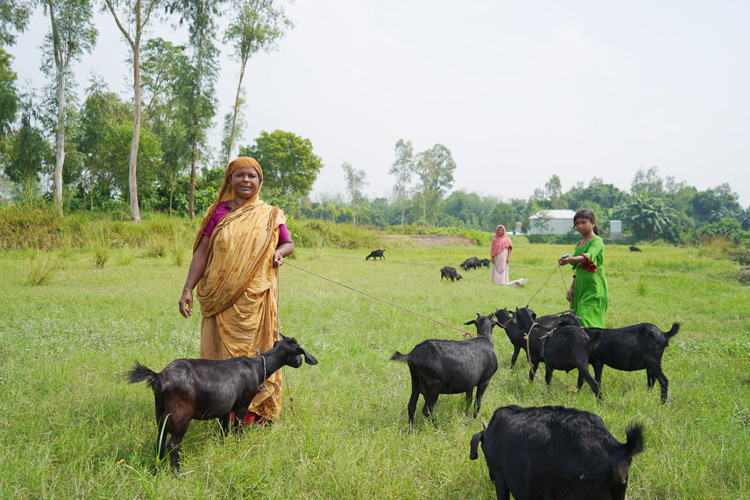
Biodiversity also includes organisms whose importance does not take the form of a separately harvested item. Soil organisms participate in decomposition and nutrient cycling. Predators and other organisms contribute to relationships that can regulate pests. Vegetation and habitat connections influence the persistence of those communities. Settle et al. (1996), working in irrigated rice systems in Java, experimentally showed how organic matter and alternative prey supported natural enemies, while early insecticide applications could disrupt predators and lead to later pest resurgence. The findings illustrate why the ecological relationships around a rice crop belong within its assessment.
These contributions are not independent commodities waiting to be added to an inventory. Their significance lies partly in their interaction. A farm can lose regenerative capacity through the interruption of a relationship even when the immediate harvest remains substantial. Systemic assessment must therefore follow connections as well as count observable harvests.
The corresponding exclusion of regenerative gains
The accounting problem operates in two directions. Damage associated with a cultivation system may fall outside its recorded expenses, while gains generated by biodiverse agroecological practices may fall outside their recognised contribution. A household that maintains seed diversity, supports soil life, sustains food from uncultivated spaces and strengthens its ability to recover after a flood performs work whose significance is only partly visible through commodity sales.
Nayakrishi treats these relationships as the foundation of cultivation and livelihood. Seed retained for another season sustains future options. Organic matter returned to soil participates in continuing ecological processes. Shared access to fodder or edible plants can support households with little land. Knowledge passed between farmers enables observation, comparison and response when conditions change. Their importance cannot be adequately represented by the price of the rice harvested in one season (Mazhar, 2019).
The resulting comparison can be systematically biased: one system receives recognition for its principal commodity while some of its burdens remain unrecorded; another receives little recognition for the regenerative capacities and diverse provisions it sustains. A narrow account can consequently favour ecological simplification even where a fuller assessment would support a different agricultural direction.
Harvest and regeneration across successive seasons
The distinction between economic production and ecological regeneration becomes especially clear across time. A harvest is a flow of material taken from a farming system during a specified period. Regenerative capacity concerns the ongoing conditions that make subsequent harvests and other forms of life possible. These conditions include soil fertility, water availability, viable seed, biological relationships and the knowledge and cooperation required to sustain them.
Systemic yield necessarily has a wider scope than the yield recorded for one crop. It can reveal provisions and regenerative gains that the narrower account leaves unseen. Where those gains are present, a grain-only account understates the agricultural system’s contribution. This is the precise basis of Nayakrishi’s challenge to conventional yield comparisons.
Long term evidence for systemic assessment
Long-term evidence strengthens the case for looking beyond immediate harvests. Raveloaritiana and Wanger (2026), drawing on 184 meta-analyses, found improvements over time in financial profitability, biodiversity, pollination, soil quality and carbon sequestration, while finding no significant overall temporal effects on crop yield, pest control or climate regulation. Outcomes differed across practices and contexts.
Systemic yield disaster resilience and national policy
A high average harvest does not establish that a household can maintain food and livelihoods through a severe disruption. Disaster resilience depends partly on whether different components respond differently to stress, whether viable seed remains accessible and whether the household can reorganise cultivation. Diversification offers alternatives, while functioning institutions make them usable.
Systemic assessment should therefore include the continuity of nourishment across difficult seasons. A crop that supplies fodder, a reserve that enables replanting, or a homestead source of vegetables may be especially important after field cultivation fails. Their significance becomes visible when assessment follows household needs and ecological recovery through time, rather than ending at the weighing of a principal harvest.
For Bangladesh, the policy implication is to judge agricultural interventions through both their immediate contribution to adequate food and their consequences for the regenerative foundation of future cultivation. Public research should retain crop-specific yield measurements while establishing whole-system comparisons across seasons. Monitoring should examine externalised damage, diverse food provision, regenerative capacities and the distribution of labour and benefits.
Public finance should support farmer-led, multi-season observation, community seed systems, habitat recovery and the practical requirements of ecological transition. Nayakrishi households should help define the questions and interpret the findings. Their daily observations provide evidence about the relationships that narrowly designed crop trials can miss. Research institutions can strengthen this work through agreed protocols, soil and water analysis, and comparisons across agroecological zones.
This approach is directly relevant to Global Biodiversity Framework Target 10, which connects sustainable agricultural management with biodiversity, resilience and long-term productive capacity. Its implementation requires evidence that farming systems sustain those relationships, rather than an assumption that a larger harvest of one crop fulfils the target (Convention on Biological Diversity, 2022).
Nayakrishi’s systemic yield concept therefore changes the basis of agricultural judgment. The question is how cultivation sustains adequate food and livelihoods while renewing the ecological relationships through which they remain possible. Grain yield belongs within that enquiry. It cannot stand in for the whole living system whose continuing regeneration makes every harvest possible.
Lessons for other contexts
The wider significance of the Bangladesh experience lies in the relationship between biological options and the institutions that make them usable. Seed diversity offers little protection if viable material cannot reach farmers in time; a storage building achieves little without regular regeneration, knowledgeable custodians and access to cultivation. Nayakrishi brings these functions together within farming households and community networks. This combination offers a practical policy lesson for other disaster-exposed agricultural regions (Mazhar & Akhter, 2023; Akhter & Mazhar, 2026).
The transferable elements are the principles of distributed seed stewardship, diversity across crops and habitats, farmer-led inquiry, and preparedness organized around agricultural time. A floodplain community elsewhere may draw directly on emergency seed planning, while a drought-prone area may place greater emphasis on water requirements, sowing opportunities and soil cover. Coastal and saline environments require their own selection and assessment. Varieties and crop combinations should therefore be chosen through local experimentation; Bangladesh’s particular crop calendar cannot serve as a universal prescription.
Application also depends on land and water access, labor availability, gender relations, tenure, seed rules and the strength of local organizations. Where these conditions differ, people must develop institutional arrangements with the people who will sustain them. Farmer exchanges can make experience accessible without assuming that knowledge or planting material can be transferred without adaptation. International seed exchange must follow applicable phytosanitary and access arrangements, while exchange of methods and joint observation can proceed through appropriate partnerships.
The international diversification studies discussed above support the relevance of these ecological relationships beyond Bangladesh, while the Nayakrishi cases explain how they are organised in practice. Neither establishes a uniform effect under every hazard. The appropriate international role for Nayakrishi is as a partner in comparative learning and policy development: an experienced movement whose principles can inform locally governed adaptation, with results assessed across seasons and different forms of disruption (Tamburini et al., 2020; Rasmussen et al., 2024).
Conclusion and policy direction
Nayakrishi’s significance for Bangladesh lies in its understanding of agriculture as the continuing regeneration of the relationships through which people obtain food, sustain livelihoods and inhabit a living world. Seed, soil, water, crops, livestock, aquatic organisms and uncultivated vegetation belong to connected ecological processes. Farmers participate in their renewal through observation, selection, cultivation, exchange and collective care. Biodiversity, in this understanding, is the living foundation of agriculture, rather than something to preserve separately from farming (Mazhar, 2019; Mazhar & Akhter, 2023).
This distinction changes how agricultural achievement should be understood. A substantial rice harvest matters, but its quantity alone cannot establish whether a farming system provides adequate nutrition, maintains seed diversity, protects water or strengthens the conditions for future cultivation. An assessment confined to grain and profit can overlook both the damage transferred to others and the regenerative gains sustained by farmers. Systemic assessment must therefore examine diverse harvests alongside the renewal of ecological relationships, the distribution of work and benefits, and the capacity of households to continue through difficult seasons.
The importance of this approach becomes especially clear during disaster. Recovery requires access to viable and appropriate seed, functioning soils and water systems, diverse sources of nourishment, and people capable of reorganising cultivation. A seed collection becomes useful through farmers’ knowledge of when, where and how its varieties can be cultivated. Disaster resilience consequently depends on the continuity of living seed systems and the households and community institutions that maintain them. Protecting those institutions is an investment in the country’s capacity to recover.
Global Biodiversity Framework Target 10 provides a basis for bringing these relationships into national agricultural policy. It calls for sustainable management through the use of biodiversity and a substantial increase in biodiversity-friendly practices, explicitly including agroecological approaches. Its objectives connect food security with resilience, biodiversity conservation and restoration, and the maintenance of ecological functions (Convention on Biological Diversity [CBD], 2022). Nayakrishi offers Bangladesh an established body of farmer-led practice through which these objectives can be pursued, investigated and improved.
Make farmer led biodiverse agroecology a national policy direction
Bangladesh should recognise farmer-led biodiverse agroecology as a strategic direction for implementing Target 10. Recognition must carry responsibilities, budgets and institutional authority. Agriculture, environment, water, fisheries, livestock, health and disaster-management institutions should work within a common implementation framework, with farmers’ organisations participating in decisions from the beginning.
The framework should identify how fields, homesteads, ponds, wetlands and shared resources can function together at household, village and landscape levels. Policies that encourage ecological farming on individual plots will remain limited if surrounding water is polluted, wetlands are disconnected, or access to common food and fodder resources is lost. National planning must address these relationships across administrative and sectoral boundaries.
Nayakrishi’s experience should inform this direction through a formal partnership between government and its farming communities, with UBINIG facilitating access to the movement’s experience and institutions. The partnership should support existing practices while assessing their adaptation across agroecological conditions. Public recognition should strengthen an expanding capacity to learn, rather than turn a living movement into a fixed package of techniques.
Expansion should strengthen existing farmer networks, enable neighbouring communities to establish their own institutions, and remove policy barriers to their continuity. Increasing the number of households matters only where seed stewardship, ecological relationships and farmer authority can be sustained. Government should therefore connect the approach with national biodiversity planning and the National Adaptation Plan, and translate it into locally agreed plans for cultivation, water, habitats and disaster preparedness.
Treat seed sovereignty as an essential public capacity
A national strategy should support farmers’ ability to maintain, select, regenerate and exchange diverse seeds. Community seed institutions require reliable facilities, locally appropriate storage, germination assessment, documentation and distributed reserves that reduce the danger of losing an entire collection in one disaster. Their effectiveness should be judged partly by whether households can obtain appropriate seed when cultivation must restart.
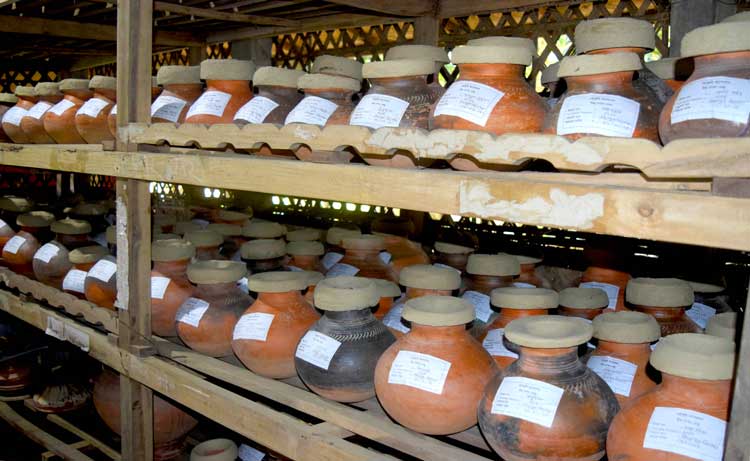
Farming households should be recognised as critical infrastructure for conservation and research. Their fields sustain on-farm conservation through continued cultivation and selection, while household and community storage maintain seed between cultivation cycles. These activities connect conservation with use, observation and adaptation.
Scientific genebanks have an important complementary role in safeguarding collections and supporting research. Their contribution becomes stronger when linked to farming communities through accessible arrangements for seed return, joint characterisation and farmer-led evaluation. Conservation policy should protect the relationship between stored seed and the living circumstances in which its qualities become known.
Seed, food and nutritional sovereignty should guide these arrangements as national policy commitments. This means strengthening people’s effective authority over the resources and decisions that determine what they cultivate and eat. Technical access to seed is insufficient if farmers cannot exercise meaningful choice over its use.
Finance regeneration and a fair transition
Public finance should support the work through which ecological farming becomes possible: seed regeneration, habitat care, soil renewal, farmer-to-farmer learning, suitable tools, local processing and access to markets. Funding should extend across several cultivation cycles because ecological changes and livelihood adjustments cannot be adequately supported through brief projects.
Agricultural expenditure and subsidy programmes should be reviewed for their consequences for biodiversity, public health and farmers’ dependence on purchased inputs. Redirecting support requires a planned transition, with technical assistance and financial protection that prevent poorer households from carrying disproportionate risks.
Climate-adaptation and disaster-recovery finance should also strengthen community seed systems and the ecological conditions of cultivation. Seed reserves, local knowledge and functioning habitats deserve support before a disaster occurs, as well as during recovery.
A dedicated budget should distinguish recurring support for custodianship, regeneration and extension from investment in storage, testing equipment and habitat restoration. Transparent grants to accountable farmer institutions should include proportionate reporting and support for financial administration, so that smaller groups can participate. Domestic allocations should provide continuity; international biodiversity and adaptation finance can add resources where eligibility and national priorities align. Funding should not be conditional on carbon-credit sales or commercial returns from seed stewardship.
Public procurement, local processing and suitable market arrangements can help sustain the livelihoods that make ecological transition feasible. These measures should reward diverse, safe and nutritionally useful foods while retaining household consumption and community exchange as legitimate purposes of cultivation. Financial support should also address transition risks through appropriate social protection and timely disaster assistance, without prescribing a single cultivation package for every location.
Regeneration must not rely on treating farmers’ time as free. Women’s work in seed care, livestock management, food gathering and household nutrition needs recognition through resources, decision-making authority and practical measures that reduce excessive workloads.
Reorganise research and extension around farming households
Farmer-led research should become a continuing part of public agricultural research. Nayakrishi households offer places for empirical observation across seasons, including the difficult periods that short crop trials can miss. Farmers should help define research questions, select comparisons, interpret findings and determine how results are used.
Scientists and extension workers can contribute soil and water analysis, experimental methods, seed-health support and documentation. Their role should strengthen farmers’ capacity to investigate their own systems. Extension services consequently need training in mixed cropping, ecological relationships, seed diversity, nutrition and participatory enquiry, alongside crop-specific knowledge.
Research should follow both harvests and regenerative capacities. It should examine nutrient flows, biological relationships, household nourishment, labour requirements and recovery after disruption. Comparisons should make their land areas, time periods and external resource requirements explicit.
Measure progress through ecological and social outcomes
Implementation needs a baseline, locally appropriate milestones and publicly reported results through 2030. Alongside crop yields, monitoring should examine cultivated and associated biodiversity, continuity of seed access, soil and water condition, household food diversity, harmful exposures, and the time required to restore cultivation after disaster.
These proposed national measures should be developed with farmers and aligned with the GBF monitoring framework. FAO’s Tool for Agroecology Performance Evaluation offers a relevant starting point for multidimensional assessment, to be adapted through consultation with farmers rather than used to replace their criteria of regeneration and wellbeing (FAO, 2019). Counting training sessions, distributing inputs or designating demonstration plots cannot by themselves establish that biodiversity and resilience have improved.
An accountable implementation plan should specify which institutions act, how funding reaches communities, and how farmers can question decisions or report failure. Progress should be reviewed jointly, with the authority to revise interventions when evidence shows that they are ineffective or create new burdens.
Annual public reviews should relate expenditure and supported area to observed ecological and household outcomes, using information disaggregated where appropriate by gender, tenure and farm circumstances. Farmers need accessible ways to raise concerns about seed access, fund allocation or exclusion. The same review should identify contradictions among agricultural support, biodiversity conservation and water management, and require responsible institutions to respond. This makes Target 10 a direction for coordinated public action rather than a separate reporting exercise.
The central policy choice is therefore about the foundation Bangladesh intends to sustain for its agricultural future. Nayakrishi offers a direction in which adequate harvests, diverse nourishment, seed sovereignty and disaster resilience depend on the continuing regeneration of the living system. Implementing Target 10 through that understanding would make biodiversity integral to agricultural planning, public finance and research. It would recognise farming households as active custodians and investigators of the ecological relationships on which the country’s food and future depend.
Bibliography
Akhter, F., & Mazhar, F. (2026, July 26). Apadkalin seed: Seeds for emergency. UBINIG. https://ubinig.org/index.php/home/showAerticle/307/english/index.html
Convention on Biological Diversity. (1992). Convention on Biological Diversity. https://www.cbd.int/convention/text
Convention on Biological Diversity. (2022). Kunming–Montreal Global Biodiversity Framework (Decision 15/4). https://www.cbd.int/doc/decisions/cop-15/cop-15-dec-04-en.pdf
Convention on Biological Diversity. (2025). Monitoring framework for the Kunming–Montreal Global Biodiversity Framework (Decision 16/31). https://www.cbd.int/doc/decisions/cop-16/cop-16-dec-31-en.pdf
Food and Agriculture Organization of the United Nations. (2014). Genebank standards for plant genetic resources for food and agriculture (Rev. ed.). https://www.fao.org/4/i3704e/i3704e.pdf
Food and Agriculture Organization of the United Nations. (2019). TAPE: Tool for Agroecology Performance Evaluation 2019—Process of development and guidelines for application. Test version. https://www.fao.org/agroecology/in-action/detail/tool-for-agroecology-performance-evaluation-(tape)---test-version/en
Food and Agriculture Organization of the United Nations. (2023, November 6). Hidden costs of global agrifood systems worth at least $10 trillion. https://www.fao.org/newsroom/detail/hidden-costs-of-global-agrifood-systems-worth-at-least--10-trillion/en
Food and Agriculture Organization of the United Nations. (n.d.). Glossary. In Land evaluation for irrigated agriculture. https://www.fao.org/4/X5648E/x5648e0m.htm
High Level Panel of Experts on Food Security and Nutrition. (2019). Agroecological and other innovative approaches for sustainable agriculture and food systems that enhance food security and nutrition (Report 14). Committee on World Food Security. https://www.fao.org/fileadmin/user_upload/hlpe/hlpe_documents/HLPE_Reports/HLPE-Report-14_EN.pdf
Intergovernmental Panel on Climate Change. (2022). Climate change 2022: Impacts, adaptation and vulnerability. Contribution of Working Group II to the Sixth Assessment Report of the Intergovernmental Panel on Climate Change. Cambridge University Press. https://doi.org/10.1017/9781009325844
Mazhar, F. (2019). Nayakrishi Andolon. In A. Kothari, A. Salleh, A. Escobar, F. Demaria, & A. Acosta (Eds.), Pluriverse: A post-development dictionary (pp. 247–250). Tulika Books.
Mazhar, F., & Akhter, F. (2023). Nayakrishi Andolon: A farmers’ movement for seed & food sovereignty and biodiversity. Shashya Prabartana.
Ministry of Environment, Forest and Climate Change. (2022). National adaptation plan of Bangladesh (2023–2050). Government of Bangladesh. https://unfccc.int/documents/637588
Rasmussen, L. V., Grass, I., Mehrabi, Z., Smith, O. M., Bezner-Kerr, R., Blesh, J., Garibaldi, L. A., Isaac, M. E., Kennedy, C. M., Wittman, H., Batáry, P., Buchori, D., Cerda, R., Chará, J., Crowder, D. W., Darras, K., DeMaster, K., Garcia, K., Gómez, M., … Kremen, C. (2024). Joint environmental and social benefits from diversified agriculture. Science, 384(6691), 87–93. https://doi.org/10.1126/science.adj1914
Raveloaritiana, E., & Wanger, T. C. (2026). Long-term agricultural diversification increases financial profitability, biodiversity, and ecosystem services: A second-order meta-analysis. Nature Communications, 17, Article 1016. https://doi.org/10.1038/s41467-025-67757-7
Settle, W. H., Ariawan, H., Astuti, E. T., Cahyana, W., Hakim, A. L., Hindayana, D., Lestari, A. S., Pajarningsih, & Sartanto. (1996). Managing tropical rice pests through conservation of generalist natural enemies and alternative prey. Ecology, 77(7), 1975–1988. https://doi.org/10.2307/2265694
Tamburini, G., Bommarco, R., Wanger, T. C., Kremen, C., van der Heijden, M. G. A., Liebman, M., & Hallin, S. (2020). Agricultural diversification promotes multiple ecosystem services without compromising yield. Science Advances, 6(45), eaba1715. https://doi.org/10.1126/sciadv.aba1715
UBINIG. (2021, September 18). Untimely flood and the resilience of Nayakrishi farmers. https://ubinig.org/index.php/home/showAerticle/245/english/UBINIG/Untimely-flood-and-the-resilience-of-Nayakrishi-farmers
UBINIG. (2022, November 14). Nayakrishi farmers’ seed preservation, land rights, and women’s empowerment. https://ubinig.org/index.php/home/showAerticle/267/UBINIG/Nayakrishi-farmers%E2%80%99-seed-preservation-land-rights-and-women%E2%80%99s-empowerment/index.html
UBINIG. (n.d.). Nayakrishi seed conservation programme information [Unpublished programme information supplied for this policy paper].
United Nations General Assembly. (2018). United Nations Declaration on the Rights of Peasants and Other People Working in Rural Areas (A/RES/73/165). https://documents.un.org/doc/undoc/gen/n18/448/99/pdf/n1844899.pdf
Farida Akhter
UBINIG(Policy Research for Development Alternative Bangladesh